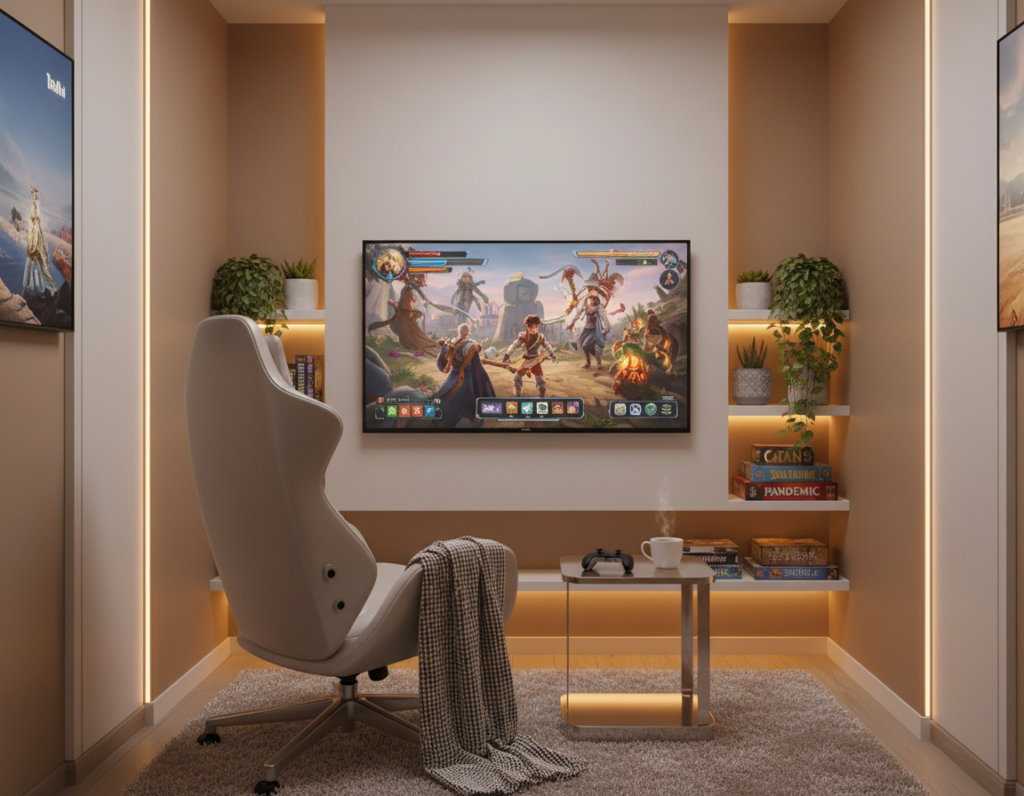
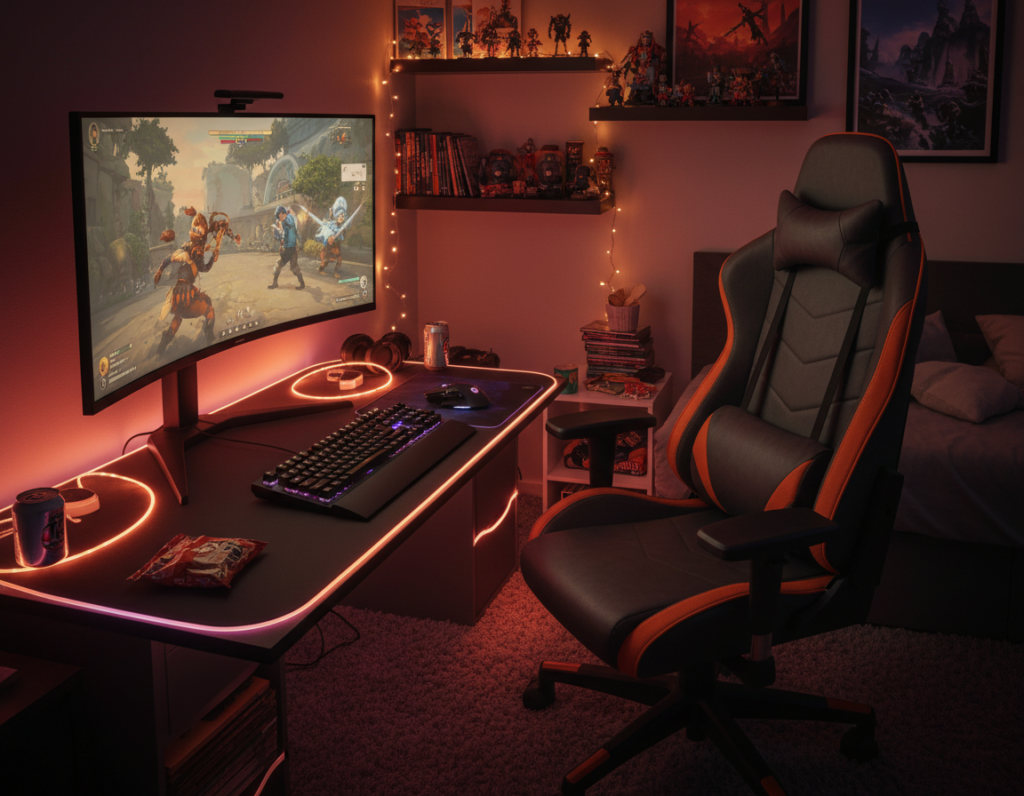
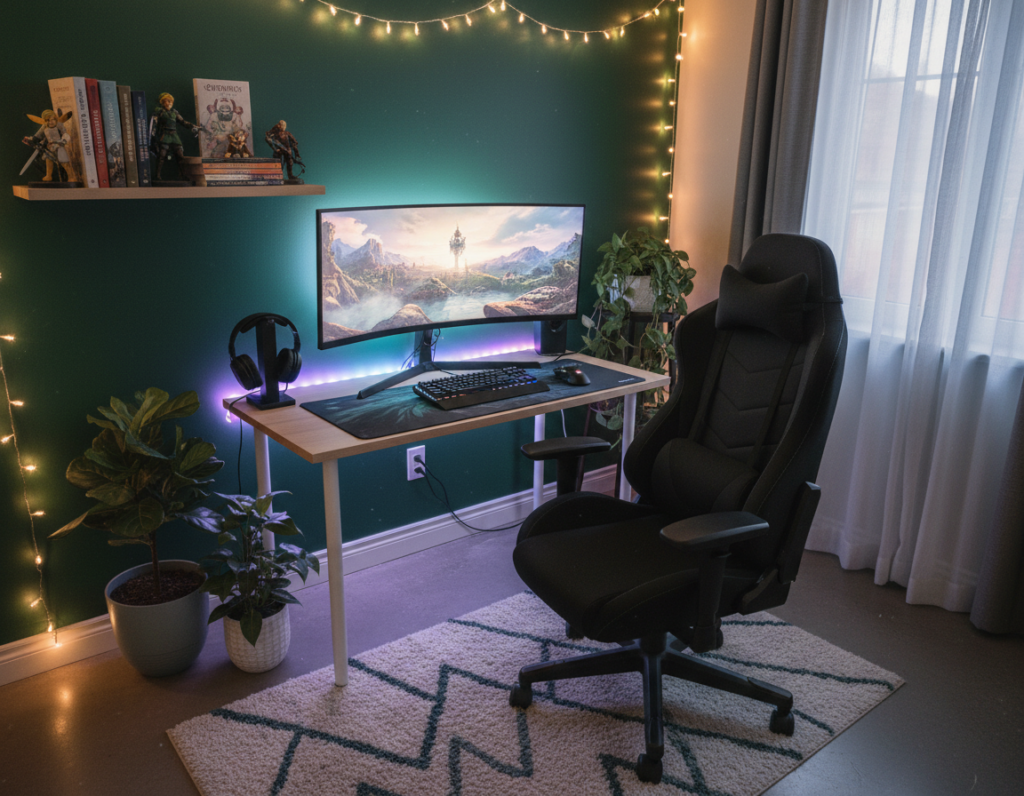
The right late-night setup can turn a cramped area into a calm, purpose-built corner. He began building PCs at 14 and learned that smart layout and light choices shape how a space performs at night.
Good design balances function and style. A compact gaming bedroom must serve as a home office, guest nook, and relaxing retreat without feeling cluttered.
Many players rely on LED strips and soft ambient lighting to improve the late-night experience. Thoughtful placement of shelves and wall mounts saves floor space and keeps the layout intentional.
Budget-friendly moves pay off. Simple upgrades like a mounted TV, slim storage, or acoustic panels make a big difference in sound and comfort.
For creative storage and convertible furniture that maximize a tiny footprint, see these practical small game room ideas.
Planning Your Cozy Gaming Room Ideas for Small Bedrooms
Start by mapping the floor and visual paths to ensure the desk, chair, and bed fit without blocking movement. A quick sketch saves returns and awkward layouts later.
Assessing the space means measuring door swings, window placement, and clear floor area. Note power outlets and sightlines to the TV or monitor. This helps place shelves and decide whether a console or PC will be primary.
Assessing Your Space
Measure twice before buying furniture. Ensure a gaming chair and desk fit with at least 24 inches of walking room. Consider a multi-functional bed to double as guest seating.
Defining Your Gaming Needs
- Decide if the setup targets PC, console, or a hybrid game station.
- Prioritize a supportive gaming chair for long sessions to protect comfort and posture.
- Match shelves and desk size to your collection of video games and accessories.
He remembers installing Prince of Persia, Doom, Wolfenstein, and Spear of Destiny from a stack of 3½” disks. That memory helps shape choices that honor past experience while optimizing modern function.
Maximizing Floor Space with Smart Layouts
Putting the desk and display against one wall is a quick way to reclaim valuable floor space. This simple move frees the center of the room and keeps circulation clear.
Use vertical storage to move consoles, shelves, and game collections off the floor. Wall-mounted shelves and floating cabinets keep items visible without creating clutter.
A smart layout keeps seating, the bed, and the desk along the perimeter. This makes a tiny game room feel larger and supports multi-use of the home space.
- Keep cables tucked behind mounts to protect floor flow and reduce visual clutter.
- Reserve the center as open space for movement and guests.
- Choose slim storage that attaches to the wall to save valuable floor space.
Design decisions that prioritize the wall and vertical zones improve comfort and the gaming bedroom’s function. The right plan balances play and daily life without sacrificing style.
Selecting Multi-Functional Furniture
Multi-purpose pieces let a compact space shift from play to work in moments. Choosing convertible furniture is the backbone of a practical gaming bedroom that must also act as a guest area or office.
Convertible pieces such as a daybed that folds into a guest bed or a sofa with hidden storage extend the function of the setup without adding clutter. A desk with built-in drawers and cable routing keeps consoles, controllers, and accessories off the floor and accessible.
Choosing Convertible Pieces
A tuckable chair or a compact gaming chair that slides under the desk frees walkways and serves as extra seating when friends arrive. Fold-down tables are ideal where tabletop space is occasional rather than constant.
- Prioritize furniture with integrated storage to protect gear and preserve sightlines.
- Pick items that convert quickly so the game room becomes a guest or work space in minutes.
- Choose durable finishes that stand up to long sessions and everyday use.
Proper furniture selection ensures the space stays organized, comfortable, and ready for multiple uses. This foundation keeps the gaming setup tidy while supporting daily life.
Creative Storage Solutions for Gaming Gear
A few clever storage moves can make every inch of a compact space work harder. Good organization keeps gear visible and usable while preserving open floor space.
Utilizing Vertical Wall Space
Mounting shelves on the wall displays consoles and favorite titles without eating into the floor area. They turn storage into decor and make games easy to reach from the desk or seating.
Hidden Storage Ottomans
Hidden ottomans double as seating and stash spots for controllers, headsets, and cables. These pieces cut down on clutter and keep the gaming bedroom tidy between sessions.
Pegboard Organization
A pegboard above the desk creates a flexible station for headphones, cables, and small controllers. Hooks and baskets make it simple to swap gear in and out as needs change.
- IKEA Trofast hack: adding a door hides plastic drawers and keeps a messy bin from dominating the area.
- Use vertical shelves to showcase collections while saving floor space.
- Pegboards and ottomans keep accessories accessible and out of sight when not in use.
Effective storage is the secret to a clean setup. When the team keeps gear organized, the space feels calmer and the game experience improves.
Enhancing Atmosphere with Strategic Lighting
Layered light choices let a compact setup feel cinematic without blasting the whole space.
Start with LED strips behind the desk to match mood and reduce shadows on the monitor. Adding a lighted accent like the ZEN metal word on a shelf gave the authors soft ambient glow and unique style. That fixture sat on the wall and acted as both decor and indirect light.
- Use a warm bias for late-night play to cut blue light and help the body wind down.
- Mix task lights at the desk with low-level ambient strips to define the space.
- Swap colors or dim levels by time and game to create an immersive atmosphere.
Practical benefits include reduced eye strain and a more inviting game area after a long day. LEDs are affordable, easy to install, and add depth to a small game room. Thoughtful lighting design turned the gaming bedroom into a relaxing, focused place ready for late-night sessions.
Incorporating Personal Gamer Decor
Custom wall pieces give any setup a signature look that tells a story. Personal decor helps a gaming bedroom feel like a curated home retreat rather than a generic space.
Handmade wall art offers an affordable way to showcase favorite games and add color without crowding the floor. Prints, framed posters, or canvas panels can sit above the bed or desk and tie the visual theme together.
Use shelves to display collectibles and small figures. Shelves double as display and storage, keeping gear off the floor and easy to reach.
Handmade Wall Art
- Create a gallery of custom posters that celebrate specific titles.
- Combine floating shelves with framed prints to mix depth and texture.
- Pick a few unique furniture accents to balance the display and keep the area functional.
Careful curation keeps a game room cohesive. Select pieces that reflect personality and match colors in rugs, bedding, or curtains. This approach makes the space feel intentional and ready for late-night play.
Managing Cables for a Clean Aesthetic
Neat wiring is the quiet upgrade that elevates any compact gaming setup. Tucked cables keep the desk area clear and make the entire room look intentional. This matters most at night when lights highlight every stray cord.
Start by grouping power and signal lines with Velcro ties, then route them into a cable management box or channel behind the desk. Clips that attach to the wall work well when outlets sit high or cables travel vertically.
Organizing console cables and controller leads reduces visual clutter and cuts dust buildup. A clean game room layout depends on hiding cords along the wall or under a cable tray so they never dangle across walkways.
“A tidy setup looks finished and makes maintenance simple.”
- Use a cable box to hide adapters and power strips.
- Label ends to speed swaps and repairs.
- Choose flat cables where possible to lie flush against the wall.
Investing time in cable management gives the gaming bedroom a professional finish and makes the space easier to clean and enjoy.
Soundproofing and Acoustic Considerations
Controlling echo and bass brings studio-level clarity to a compact play area. Soundproofing a gaming bedroom is essential to enjoy games without outside distraction. It also protects neighbors and other people in the home from late-night noise.
Start by placing acoustic panels on key walls to cut reflections and tame midrange echo. Panels near the desk and behind the seating yield the biggest improvement in sound quality.
Sealing gaps in the walls and along the floor improves isolation over time. Use weatherstripping on doors and foam sealant around outlets to reduce sound leaks.
Lay out pads or rugs on the floor and add heavy curtains to help absorb high frequencies. Many gamers add acoustic foam at first, then upgrade to denser panels for improved low-frequency control.
- Place panels symmetrically on walls to preserve a balanced soundstage.
- Combine bass traps in corners with mid-frequency panels on flat surfaces.
- Prioritize comfort and long-session quality when choosing materials.
“Precision in acoustic treatment matters as much as precision in the hardware.”
Budget-Friendly Upgrades for Your Setup
A thoughtful €170 transformed the project into a high-impact update without overspending. They stretched funds by repainting a desk and bed, reusing a table as a media stand, and choosing targeted purchases that improved comfort and style.
LED strips and smart lights were the first buys. These fixtures shifted mood and lowered eye strain more than an expensive peripheral would. Next, DIY shelves added storage and reclaimed floor space while showcasing favorite games and posters.
A modest investment in a supportive gaming chair or a sturdy table made longer sessions noticeably better. Personal wall art and printed posters gave the area character at low cost. Together, these moves raised perceived quality without breaking the budget.
- Repurpose furniture: sand, paint, and refinish to refresh style.
- DIY shelves: save money and add storage near the desk.
- Targeted buys: LED lighting, chair upgrade, and a simple table boost comfort and mood.
“Smart shopping and careful DIY can yield a professional-looking game room on a tight budget.”
Conclusion
Smart planning and clear priorities make it simple to shape a late-night gaming setup that feels calm and efficient. They can fit the essentials, keep sightlines open, and make the most of every inch of space.
Personal touches like wall art and a supportive gaming chair raise comfort and style without crowding the layout. A few DIY upgrades and careful purchases help the game room reflect taste while staying practical.
Function beats flash on a tight budget. With thoughtful layout, modest spending, and an eye on comfort, even a compact room becomes a lasting gaming bedroom that works day and night.