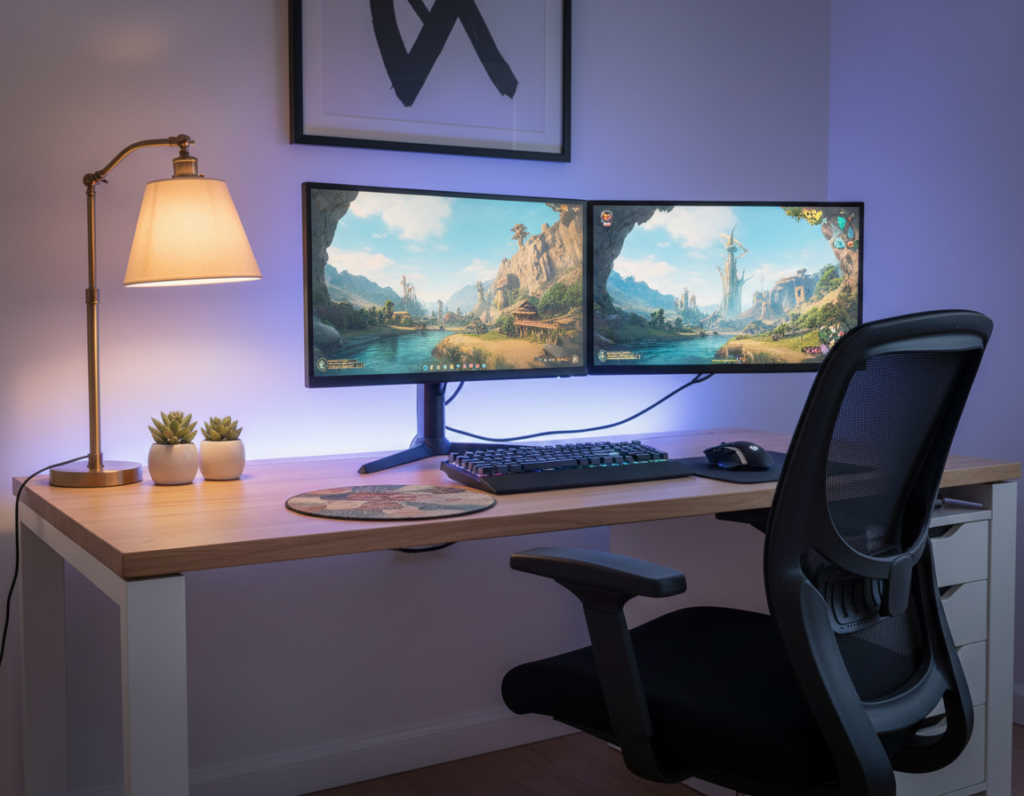
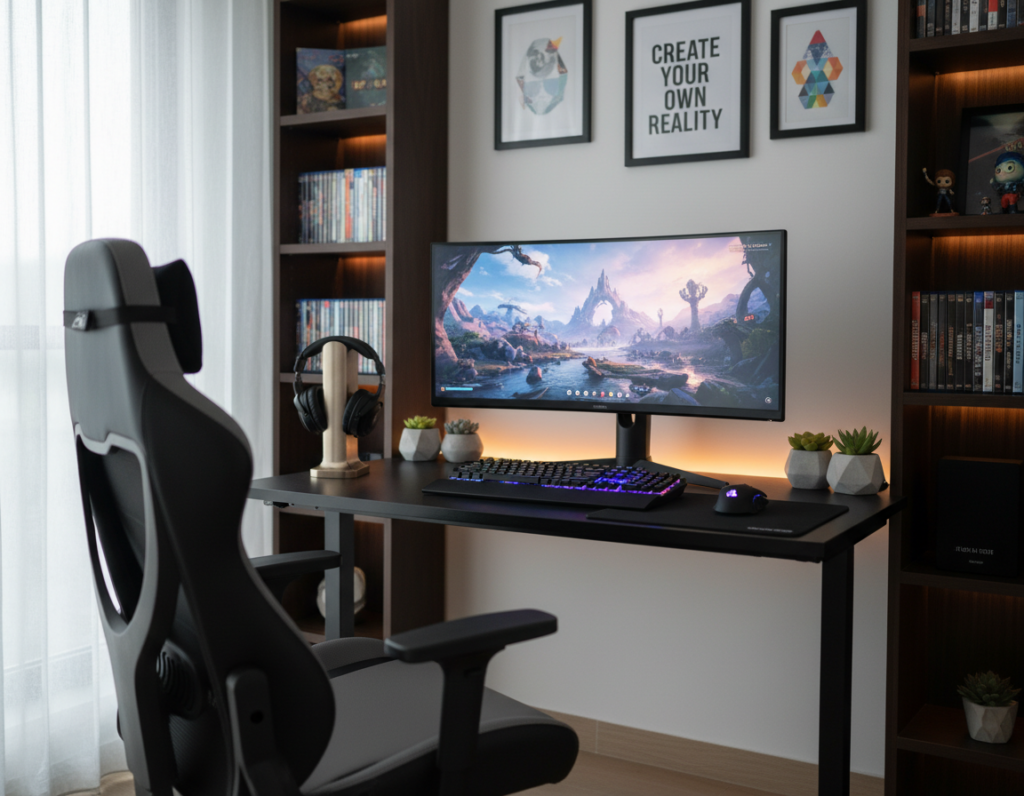
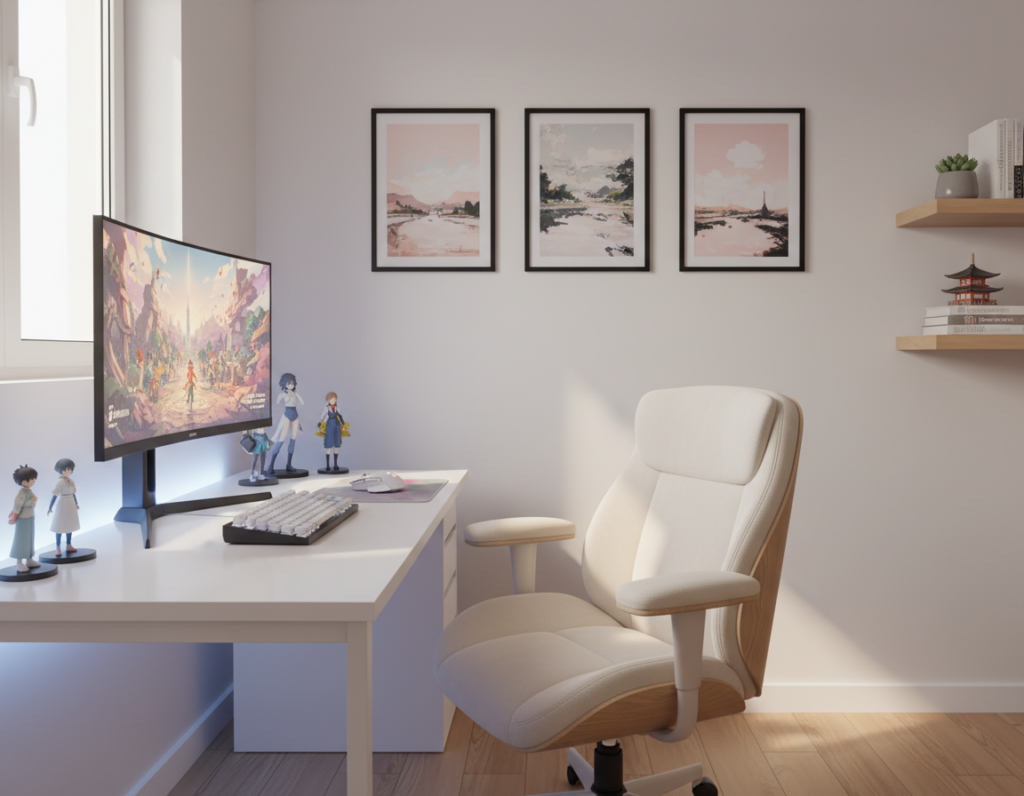
Choosing the right gaming setup color palette sets the tone for any home gaming room. A clear scheme brings balance to the space and makes every light and neon accent feel intentional.
They should consider how wall shades and wood accents influence mood and comfort. Integrating LED lights and specific tones helps transform a room into an immersive environment.
Professional help can speed the process. Nippon Paint offers a paint calculator and expert guidance to ensure a high-quality finish and cohesive design.
Whether a person leans toward cool blue tones or warm orange highlights, the right choices create energy and calm where needed. For examples on coordinating case accents and mats, see this PC aesthetic guide.
The effect of a thoughtful scheme is clear: rooms feel more cohesive, gamers stay focused, and the design supports both comfort and excitement.
The Psychology of Color in Your Gaming Space
Color choices shape how someone feels while they play and can sharpen attention or soothe nerves. Understanding this helps craft a gaming room that supports long sessions and quick reflexes.
Color psychology studies how hues affect emotions, behavior, and mental well-being in a room. Designers often select shades to boost focus, calm nerves, or add excitement.
- Cool tones like green or purple tend to create a peaceful atmosphere that helps concentration.
- Warm hues such as orange or blue accents can increase energy and alertness during intense games.
- Neon accents on a wall or in small details shift the mood, making the space feel more dynamic without overwhelming it.
A thoughtful scheme ties every choice together so the room feels balanced. By matching colors to the player’s needs, the environment supports both focus and enjoyment.
Selecting the Ideal Gaming Setup Color Palette
A simple theme can tie the room together and make every element feel like it belongs.
Reflecting your personality
Players should pick from the 16 gaming room paint ideas that fit their taste. These choices turn a plain room into a unique space that matches identity.
Tips:
- Pick one dominant tone and one accent to keep the room clean.
- Use finishes and wall art that mirror hobbies and favorite games.
- Balance bold choices with neutral elements so the space feels intentional.
Match the room design to play habits so each session feels more immersive. A balanced scheme creates a sense of purpose and helps focus on the game.
- Competitive players often favor high-contrast choices for visual clarity.
- Casual players may prefer softer tones to create a relaxed room.
- Streamers can use accents to highlight camera backgrounds and brand identity.
Bottom line: Evaluate different ideas, prioritize personal taste, and choose a cohesive design that makes the room feel like a sanctuary for games.
Creating Balance with Neutral Tones
Neutral tones form the quiet foundation that lets every element in a room feel deliberate. A base of matte black or soft gray gives a refined look and helps maintain focus during long sessions.
The role of minimalist aesthetics is to remove distractions so the room feels calm and purposeful. Minimalist choices use simple shades and a few well-chosen elements to create a cohesive environment.
Wood elements warm a neutral scheme. Natural grain and warm finishes prevent the room from feeling sterile while keeping the overall sense balanced.
The practical approach
- Use black white accents to keep the look professional and distraction-free.
- Position lighting to highlight surfaces, not overwhelm them.
- Favor matte finishes like matte black to cut glare and steady mood.
Result: A neutral scheme makes the room a peaceful oasis where the gaming setup stands out without competing with bold hues. This approach supports focus, comfort, and a polished home environment.
Enhancing Focus Through Cool Color Schemes
A calm range of blues and greens can sharpen focus without adding visual strain. These tones reduce tension and help maintain steady attention during long sessions.
Blue promotes relaxation and eases stress. It helps players keep clarity during each game and reduces eye fatigue.
Mint green feels refreshing. It invigorates the room and supports sustained focus in a gaming room environment.
- Use soft blue walls to create a tranquil atmosphere that aids concentration.
- Add mint green accents to keep the room feeling lively but calm.
- Keep neon highlights minimal so the peaceful mood stays intact.
- Balance cool tones with neutral furnishings for a professional, productive room.
Overall, a cool color scheme gives gamers a steady sense of calm. This effect helps the room feel like a focused, supportive environment for better performance.
Boosting Energy with Warm Hues
Warm hues inject a lively pulse into a room and change how players feel during play. These tones lift mood and add urgency without much effort.
Use warmth to tune the atmosphere. Strategic reds, oranges, and yellows bring focus and excitement. Small accents go a long way.
Igniting Passion with Red
Fiery red raises adrenaline and adds a high-stakes look. It works best as an accent on one wall or behind a monitor.
Stimulating Creativity with Orange
Orange shades inspire new ideas and keep the mood lively. Try orange LEDs or a fabric accent to spark imagination during creative games.
Inspiring Positivity with Yellow
Sunflower yellow lifts spirits and improves motivation. Use it sparingly to avoid glare; paired with neutral furnishings, it feels warm and inviting.
- Boost energy with red or orange accents and LED lights.
- Limit bold shades to one or two zones to keep balance.
- Combine warm tones with neutral walls for a dynamic yet steady room.
Integrating Lighting Effects for Visual Depth
Dynamic light choices let a room respond to each game’s pacing and mood. LED strips mounted along ceilings or behind screens add layers of depth and make scenes feel more immersive.
Designers use neon accents and cool blue tones to create a professional, balanced atmosphere. Black white transitions and subtle green highlights change the mood between calm and intense play.
For practical control, combine ambient lights with directional LEDs. Place strips behind monitors and under desks to reduce glare and boost contrast.
Simple schemes let the room adapt: one tone for menus, a brighter hue for action, and a soft wash for breaks. This keeps the room cohesive and functional.
“The right lighting effect can transform a room, providing the energy and excitement needed for top performance.”
- Use LED zones to match scenes to game events.
- Mix neon accents with neutral walls for balance.
- Layer lights to create depth without distraction.
For RGB ideas and schemes that map to gameplay, see this RGB color schemes guide. A thoughtful lighting plan gives the room style, comfort, and the right atmosphere for every session.
Conclusion
A cohesive visual approach turns separate elements into a unified, purposeful room. Thoughtful choices in color and light shape focus, energy, and long-term comfort for every session.
The right mix of neutral tones with warm or cool hues gives a reliable foundation and room to personalize. Integrating layered lighting adds depth and makes scenes feel more immersive.
Whether someone is a casual player or a competitive gamer, these ideas help build a space that reflects personality and boosts performance. Start by picking a palette and small lighting zones to guide the transformation today.